中文简体
中文简体โรงงานเม็ดทรายแมว Anchorear Ring Die
Cat:โรงสีเม็ด Anchorear Stainless steel Die
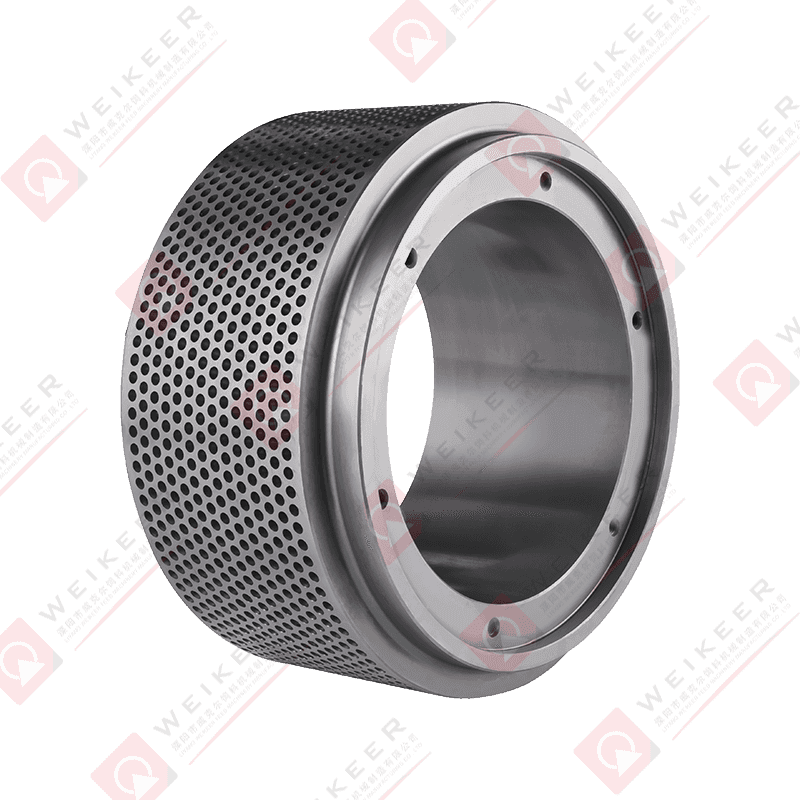
แม่พิมพ์แหวนถูกนำมาใช้ในโรงงานอัดเม็ดเพื่อสร้างวัสดุครอกแมวบดให้เป็นเม็ดที่สม่ำเสมอ เม็ดเหล่านี้จะถูกทำให้แห้งและบรรจุหีบห่อสำหรับผู้บริโภค ได้รับก...
See Details
When it comes to pellet mill performance, the material used in your die rollers is one of the most consequential choices you'll make. The r is constantly under immense radial pressure, friction, heat, and abrasive forces from raw material. Choose the wrong steel, and you face premature wear, costly downtime, and inconsistent pellet quality. The two most commonly debated materials in the industry are 20CrMnTi alloy steel and 100Cr6 spring/bearing steel. Each brings a distinct set of mechanical properties to the table, and understanding those differences is the key to making the right investment for your operation.
20CrMnTi is a low-carbon, case-hardening alloy steel that is widely used in heavy-duty gear, shaft, and r manufacturing across China and Asia. The designation breaks down as follows: "20" refers to a carbon content of approximately 0.20%, while Cr (chromium), Mn (manganese), and Ti (titanium) are the primary alloying elements. This combination delivers a tough core with a hard, wear-resistant surface after heat treatment — specifically carburizing and quenching.
The titanium content in 20CrMnTi is particularly important. It refines the austenite grain, inhibits grain coarsening during carburizing, and improves the toughness of the case-hardened layer. This makes the r significantly more resistant to surface spalling and cracking under cyclic impact loads — a common failure mode in pellet mills processing fibrous or abrasive biomass, wood chips, or straw.
100Cr6 (also known as SAE 52100 or GCr15) is a high-carbon, chromium-bearing steel originally engineered for rolling element bearings. It contains approximately 1.0% carbon and 1.5% chromium, giving it exceptional hardness and wear resistance through-and-through — without the need for carburizing. After through-hardening (quench and temper), 100Cr6 achieves a uniform hardness throughout the r cross-section.
Because 100Cr6 is hardened all the way through, it maintains its wear characteristics even as the r surface gradually wears down in service. There is no risk of "breaking through" the hardened case into a softer core — a critical advantage in continuous, high-pressure pelleting environments. However, the trade-off is reduced toughness: 100Cr6 is more brittle than case-hardened 20CrMnTi and can be prone to fracture under sudden shock loads.
Below is a direct side-by-side comparison of both materials across the most critical performance criteria for pellet mill applications:
| Property | 20CrMnTi | 100Cr6 |
| Carbon Content | ~0.20% (low carbon) | ~1.00% (high carbon) |
| Hardening Method | Carburizing + Quenching (case hardening) | Through-hardening (quench & temper) |
| Surface Hardness | HRC 58–62 | HRC 60–64 |
| Core Toughness | High (tough core beneath hard case) | Lower (uniform but more brittle) |
| Shock Load Resistance | Excellent | Moderate |
| Wear Resistance (long-term) | Good (diminishes as case wears) | Excellent (consistent throughout) |
| Typical Application | Biomass, straw, animal feed | Wood pellets, high-density materials |
| Cost | Lower material & processing cost | Moderate to higher |
| Fracture Risk | Low | Moderate (brittle under impact) |
The "better" material depends entirely on what you're pelleting, your operating conditions, and your maintenance philosophy. Here's how to think through the decision:
The distinction between these two materials is largely defined by their heat treatment processes, not just their alloy chemistry. For 20CrMnTi, the carburizing process involves exposing the machined roller to a carbon-rich atmosphere at temperatures between 900–950°C. Carbon diffuses into the surface layer to a controlled depth, enriching it from 0.2% to approximately 0.8–1.0% carbon. After quenching, this carbon-rich surface transforms into hard martensite while the low-carbon core remains tough and ductile. The result is a gradient structure — hard outside, tough inside.
For 100Cr6, the through-hardening process is simpler: the roller is austenitized at around 850°C and then oil-quenched, transforming the entire cross-section into martensite. A low-temperature temper at 150–180°C is applied afterward to relieve internal stresses without significantly reducing hardness. The roller achieves its final hardness uniformly from surface to center. This uniformity is both its greatest strength and its greatest limitation — excellent wear resistance, but reduced ductility throughout.
In practical pellet mill operations, both materials show different failure modes as they age. 20CrMnTi rollers typically exhibit gradual surface wear as the hard case is slowly consumed. Operators often observe a predictable increase in pellet diameter tolerance as the roller wears, giving maintenance teams time to plan a scheduled replacement. The tough core helps prevent sudden fracture, so even a worn 20CrMnTi roller rarely fails catastrophically — it simply produces increasingly undersized pellets until replaced.
100Cr6 rollers tend to maintain their dimensional profile for longer, owing to the through-hardened structure. However, when they do fail — especially in applications involving occasional hard contamination or shock loads — the failure mode can be more sudden: surface cracking, spalling, or even full roller fracture. For production lines running 24/7 with premium raw material control, 100Cr6 can outlast 20CrMnTi by a meaningful margin. In less controlled environments, however, the risk of brittle failure makes 20CrMnTi the safer, more forgiving choice.
There is no universal winner between 20CrMnTi and 100Cr6 for pellet mill rollers. Both steels are engineered solutions that excel in specific contexts. 20CrMnTi delivers unbeatable toughness, impact resistance, and cost-efficiency — making it the dominant choice for agricultural biomass, mixed feedstock, and general-purpose pelleting operations. 100Cr6 delivers superior through-hardened wear resistance and dimensional stability — making it ideal for controlled-input, high-volume wood pellet production where the feedstock is clean, dry, and consistent.
When evaluating your ring die roller material, go beyond the spec sheet. Ask your supplier about the specific heat treatment process, case depth verification (for 20CrMnTi), and post-hardening inspection methods. A well-made 20CrMnTi roller with proper carburizing will always outperform a poorly processed 100Cr6 roller — and vice versa. Material grade is the starting point; manufacturing quality is what ultimately determines performance in the field.

แม่พิมพ์แหวนถูกนำมาใช้ในโรงงานอัดเม็ดเพื่อสร้างวัสดุครอกแมวบดให้เป็นเม็ดที่สม่ำเสมอ เม็ดเหล่านี้จะถูกทำให้แห้งและบรรจุหีบห่อสำหรับผู้บริโภค ได้รับก...
See Details
แม่พิมพ์แหวนอัดเม็ดแบบสกรูสำหรับการผลิตอาหารสัตว์และสัตว์ปีกเป็นส่วนประกอบสำคัญในเครื่องอัดเม็ดที่ใช้ในการแปลงวัตถุดิบอาหารสัตว์ให้เป็นเม็ดสม่ำเสมอ...
See Details
ปลายเปิดลูกฟูกลูกกลิ้งเหล็กโลหะผสมได้รับการออกแบบสำหรับการใช้งานเฉพาะที่จำเป็นต้องมีความแข็งแรง ความทนทาน และความต้านทานต่อการสึกหรอ ผลิตจากเหล็กโล...
See Details
ปลายปิดลูกฟูกลูกกลิ้งโลหะผสมเหล็กเป็นส่วนประกอบเฉพาะที่มีคุณสมบัติและการใช้งานที่แตกต่างกัน โลหะผสมเหล็กรับประกันความทนทานสูง ทำให้ลูกกลิ้งเหล่านี้...
See Details
ลูกกลิ้งรอยบุ๋มของลูกกลิ้งโลหะผสมเหล็กมีข้อดีเฉพาะตัวและการใช้งานเฉพาะซึ่งทำให้มีคุณค่าในอุตสาหกรรมต่างๆ การออกแบบพื้นผิวที่มีรอยบุ๋มช่วยเพิ่มการยึ...
See Details
ลูกกลิ้ง 20CrMnTi ที่มีลอนโค้งเป็นส่วนประกอบประสิทธิภาพสูงที่ทำจากเหล็กโลหะผสม 20CrMnTi ที่ทนทาน การออกแบบโค้งมนที่เป็นเอกลักษณ์ช่วยเพิ่มการยึดเกาะ...
See Details
ลูกกลิ้ง GCr15 ที่มีลอนปิดและการออกแบบรอยบุ๋มเป็นส่วนประกอบประสิทธิภาพสูงที่สร้างจากเหล็กแบริ่ง GCr15 ซึ่งขึ้นชื่อในเรื่องความทนทานต่อการสึกหรอและค...
See Details
ลูกกลิ้ง GCr15 ที่มีการออกแบบร่องแนวทแยงเป็นส่วนประกอบที่ได้รับการออกแบบทางวิศวกรรมขั้นสูงซึ่งทำจากเหล็กแบริ่ง GCr15 ซึ่งขึ้นชื่อในด้านความแข็งแกร่...
See Details
ลูกกลิ้งเหล็กสปริงที่มีปลายปิดเป็นลูกฟูกเป็นส่วนประกอบที่แข็งแกร่งซึ่งออกแบบมาโดยเฉพาะสำหรับการขนถ่ายวัสดุอย่างมีประสิทธิภาพ ลูกกลิ้งนี้ทำจากเหล็กส...
See Details
ลูกกลิ้ง 100Cr6 ที่มีการออกแบบร่องแนวทแยงเป็นส่วนประกอบพิเศษที่สร้างขึ้นจากเหล็กสปริงคุณภาพสูง โครงสร้างที่แข็งแกร่งของลูกกลิ้ง 100Cr6 ช่วยให้มั่นใ...
See Details
Add: No.12 Zhongdali Road, สวนอุตสาหกรรม Xinbei, เมือง Daibu, Liyang, Jiangsu, China

Phone: +86-13901498718

Tel: +86-0519-87306996

Email: alicezy@wkejx.com
ลิขสิทธิ์ © by Liyang Weikeer Feed Machinery Manufacturing Co.Ltd. Rights Reserved.
 ผู้ผลิตโรงสีเม็ดพลาสติก
苏ICP备17039119号
ผู้ผลิตโรงสีเม็ดพลาสติก
苏ICP备17039119号